The effie Journey: AI Leadership in CPG with Insights from the U.S. Market


Artificial intelligence is rapidly transforming CPG, especially in areas where success depends on precise retail execution. In this context, effie CEO Ruslan Okhrimovych shared insights in an interview hosted by the Kyiv-Mohyla Business School alumni community, providing a grounded perspective on what AI leadership looks like in real operational environments.
Formally, the conversation focused on his entrepreneurial and management journey. In practice, however, it evolved into an in-depth discussion on AI in retail, systematic execution, and scaling a product across international markets. This topic is especially relevant now, as effie expands into multiple countries and works with global CPG players.
We turn the chaos of operational business processes into a structured narrative not only within a single retailer, but across the entire ecosystem.

AI in Retail: Reality Control, Not Analytics for the Sake of Analytics
According to Ruslan Okhrimovych, artificial intelligence is neither a visual add-on nor just a “smart dashboard.” Its real value lies in synthesizing fragmented agreements between brands, distributors, and retailers — and converting them into executable actions.
Effie focuses on the point where most CPG strategic decisions lose their power: the store as the “moment of truth.” Agreements on shelving, pricing, promotions, and standards are made at headquarters but executed by thousands of people in the field. This is where the gap between intent and reality emerges.
How AI works at effie:
- Collect all agreements from multiple sources
- Structure them into a single system
- Break them down into clear tasks for specific executors
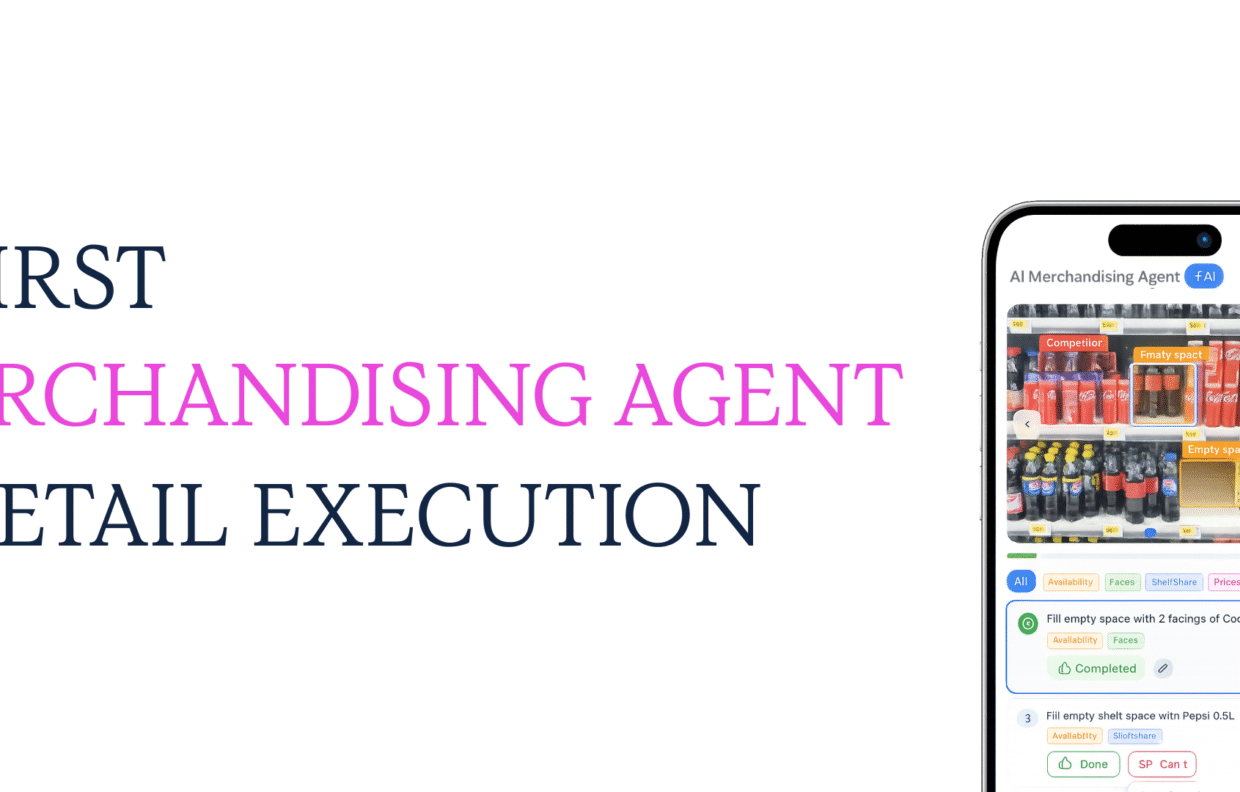
- Verify results through computer vision and compliance rules
We make sure the product is where it should be, in the right quantity, and that all promotions are launched exactly as intended.
Here, AI is not about the future of retail — it’s about everyday operational reality, where it becomes a discipline of execution.
Retail Execution as a Systemic Challenge
Execution in retail is not an issue of individual people or stores; it is a systemic challenge inside an ecosystem with diverging interests, KPIs, and budgets. Effie works simultaneously with brands, distributors, and retailers, creating a transparent environment where all parties trust both the data and the execution itself.
Product logic:
- A store photo is not “reporting for reporting’s sake”.
- AI determines whether a standard is met
- If not, the system automatically generates corrective tasks
Execution is no longer a manual effort, but a managed, repeatable cycle that delivers clear, measurable value to clients.

The U.S. Market: The Same Problems—Just at a Larger Scale
In the U.S. market, the challenges are similar, but the scale of chaos is much larger. High labor costs and talent shortages drive self-service models, where part of the execution is shifted to store staff. Effie is testing such approaches: store employees validate standards, receive incentives, and the platform ensures data reliability through AI.
We guarantee that this data can be trusted
1. A Highly Fragmented Distribution Landscape
The U.S. system combines the “Big Four” national distributors (UNFI, KeHE, Core-Mark, McLane) with a broad network of influential regional distributors. Most smaller distributors provide only basic services — logistics and order processing — leaving brands with limited visibility and minimal control over shelf placement and compliance.
2. Universal Retail Execution Challenges for CPG Manufacturers
Across global, regional, and craft brands, we observed consistent execution pain points:
- Global manufacturers struggle with visibility and control at the local store level
- Regional and craft brands lack the field resources to monitor merchandising
- All segments require better transparency into what happens on shelves
This underscores a significant opportunity for effie to deliver unified, data-verified retail execution across the entire value chain.
3. A Diverse and Complex Independent Retail Environment
The U.S. independent retail sector consists of several distinct segments:
- Premium & Organic — focused on quality, brand standards, and curated merchandising
- Value-driven — prioritizing price and turnover, with limited attention to shelf execution
- Cultural/Ethnic — owner-operated stores with specialized assortments and unique decision-making processes
These segments, together with the influence of private labels and strong regional brands, create a dynamic CPG ecosystem where execution gaps directly impact sales outcomes.
Overall, the U.S. market provides a fertile environment for effie: a complex distribution network, uneven technological maturity, and widespread execution challenges all point to the need for an AI-powered platform that ensures accurate product placement, promotional execution, and consistently high retail standards at scale.
Conclusion
The interview demonstrates that AI in CPG is a tool for creating order, execution is the key to results, and scaling requires focus and discipline. Effie positions itself not just as a technology provider, but as a partner that deeply understands the reality of retail, with all its complexity, chaos, and necessary compromises.
Related

AI Merchandising Agent vs. AI Image Recognition

Overview of CAGNY 2026