Retail & CPG: What Changed In 2025 And Why It Matters In 2026


2025 marked a year of operational recalibration for the Retail and CPG industries. After several years of growth driven largely by inflation and price increases, the industry entered a phase where operational efficiency became the primary driver of success.
In practice, it became clear that results are defined not by technology itself, but by how effectively it is embedded into real-world processes — on the shelf, in the store, and during the store visit. Companies that invested early in execution capabilities are already seeing efficiency gains. For others, 2026 will bring increasing pressure to catch up.
This article summarizes the key shifts that shaped Retail and CPG in 2025 and explains why they will be critical for competitiveness in 2026.
A Market Under Operational Pressure
Despite ongoing digitalization, offline retail remains the primary point of contact between brands and shoppers. The role of the physical store is also transforming: it still generates over 80% of transactions, while increasingly serving as both an experience and a fulfillment hub.
Retailers face labor shortages, rising operating costs, and sustained pressure on margins. In this environment, product availability, correct pricing, and proper shelf placement are no longer competitive advantages — they are table stakes. Any deviation has an immediate impact on sales performance and customer loyalty.
According to Forbes, retailers entering 2026 are increasingly prioritizing operational efficiency and execution readiness over marketing scale, as labor shortages and margin pressure continue to reshape in-store operations. For CPG brands, this translates into a clear reality: success belongs not to those with more SKUs, but to those with tighter control over shelf execution.
AI Moves from Experimentation to Measurable Business Impact
In 2025, AI reached a turning point in retail. It moved beyond pilots and early experimentation and began to be assessed through tangible business outcomes.
The focus shifted from adoption to value: data accuracy, response speed, and clear ROI. Companies scaled only those solutions that directly improved on-shelf availability, planogram compliance, and promotional execution.
AI stopped being viewed as an innovation initiative and became a practical driver of performance — judged not by sophistication, but by its ability to deliver consistent, tangible outcomes.
AI Agents Driving Real-Time In-Store Execution
In 2026, success will depend less on abstract AI strategies and more on deploying AI agents directly within daily execution workflows.
These agents become part of in-store operations — auditing shelf placement, analyzing store photos, monitoring prices and promotions, and triggering decisions at the individual store level during the visit, not days later through reports.
By integrating AI agents into operational workflows, companies reduce manual checks, shorten the time from issue detection to resolution, and create stronger alignment between headquarters and field teams.
Learn more about AI agents and how they work in retail execution in our previous article.
Why Turning Operational Signals into Action Is a Challenge in 2026
As retail execution becomes more data-driven, the challenge lies in converting insights into consistent in-store action. Companies now see more than ever through photos and audits, yet often struggle to translate these signals into clear, repeatable tasks for field teams.
At scale, value lies not in data volume or tool count, but in clear prioritization — knowing what must be fixed in each store, right now. Without built-in prioritization and decision logic, operational signals accumulate faster than teams can act on them.
Errors in availability, placement, or promotional execution immediately impact sales and trust, while slow, complex systems fail to keep pace with modern retail dynamics.
In 2026, winners will be those who build a simple, controllable execution model — where data automatically translates into action, and scale creates discipline rather than chaos.
Where Growth Will Come From in 2026
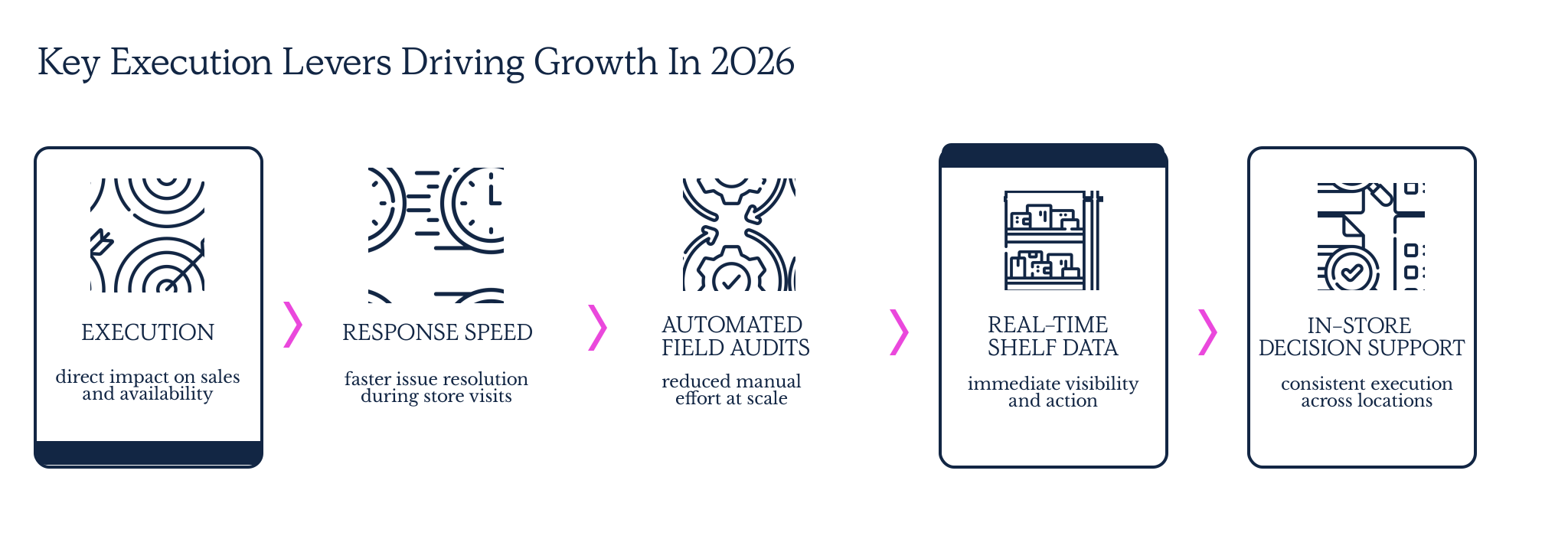
Growth in Retail and CPG will not be driven by assortment expansion, but by operational excellence. Key drivers include execution accuracy, response speed, automated field audits, and real-time shelf data.
Brands that can see the true in-store situation and act immediately will gain a sustainable competitive advantage — even in volatile market conditions.
How Effie Enables Scalable Retail Execution
Effie is an AI-powered CPG retail execution platform designed to ensure merchandising compliance, on-shelf availability, and real-time execution across thousands of stores.
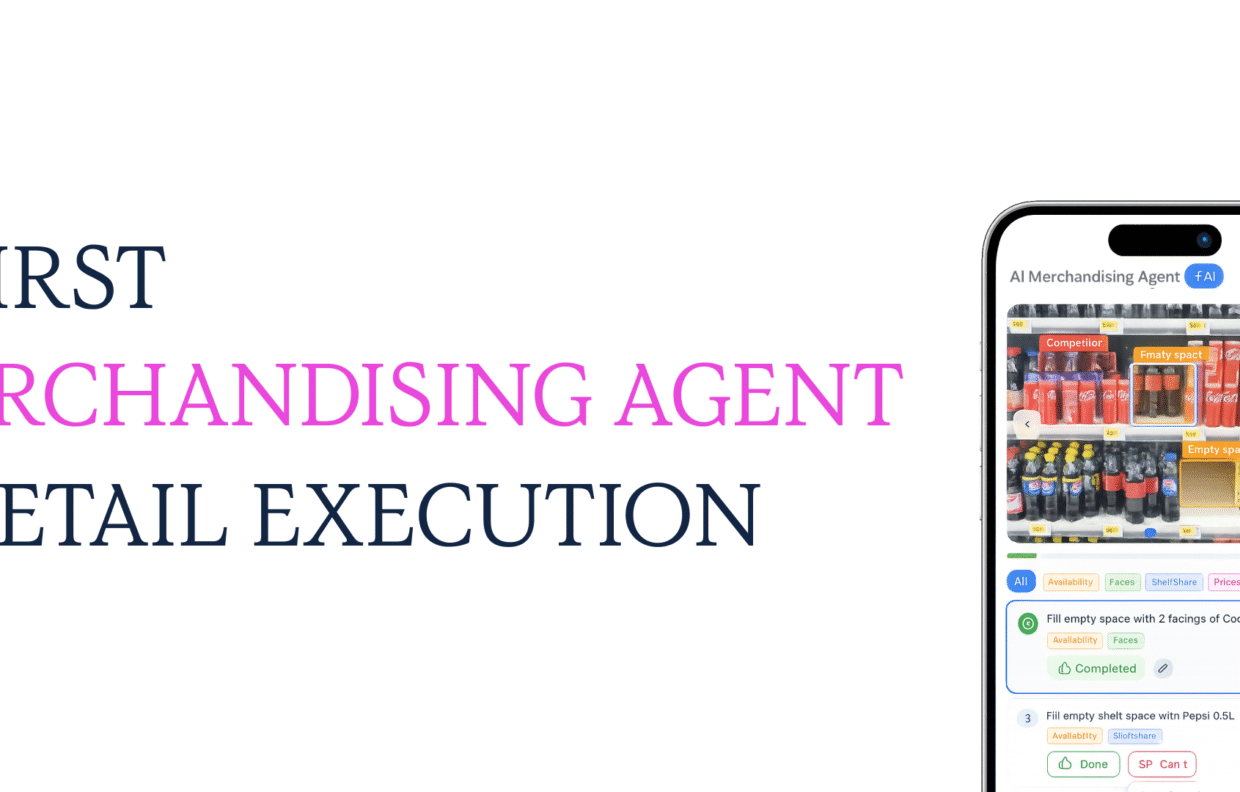
Effie helps CPG brands and retailers move from data to action through an AI Merchandising Agent. The agent automatically analyzes in-store photos using AI, identifies issues with on-shelf availability, shelf execution, and promotions, and converts these signals into clear, prioritized tasks.
Instead of after-the-fact reports, teams receive instant feedback during the store visit. Effie connects headquarters and field teams within a single execution loop, reducing response time and operational losses.
In 2026, this enables not just automation but the ability to scale high-quality execution across thousands of stores simultaneously.
What This Means for Retail & CPG in 2026
2025 demonstrated that fragmented solutions and isolated experiments no longer work. In 2026, market leaders will be companies that combine technology with disciplined execution and act quickly at the store level.
AI becomes the standard. Operational discipline becomes a growth requirement. And the speed from data to action — increasingly enabled by agent-based execution — becomes a critical efficiency factor at scale.
Want to learn more or discuss your execution challenges?
Contact the effie team at sales@effie.ai — we’ll be happy to show how the platform can help improve on-shelf availability, shelf execution, and in-store performance.
Related

AI Merchandising Agent vs. AI Image Recognition

Overview of CAGNY 2026