On-device Image Recognition: Fixing the Data Lag Behind OOS


The global CPG industry loses up to $1 trillion annually due to products being out of stock on the shelf. Studies show that 30–40% of OOS situations are caused by slow data capture and delayed reporting. By the time a merchandiser submits a manual report, a photo is processed in the cloud, and HQ reviews the results, the moment of sale is already lost — the customer has moved on, and the opportunity is gone.
Where Traditional Shelf Auditing Methods Fall Short
In many CPG organizations, a significant share of shelf data is still collected manually — in notebooks, spreadsheets, or through photos that require additional processing. This inevitably leads to delays, inconsistencies, and subjective interpretations. Information often reaches HQ already outdated, long after the shelf has changed.
Cloud-based recognition was expected to solve this issue. Yet, it introduces its own limitations: dependence on internet quality, noticeable lag for every processed image, and ongoing cloud computing costs that scale with the volume of visits. The result is a persistent gap between what is happening on the shelf and what management sees in reports. Closing this gap requires tools that deliver speed, accuracy, and autonomy — specifically, computer vision running directly on the device.
Why On-device Image Recognition Is a Strategic Breakthrough for CPG
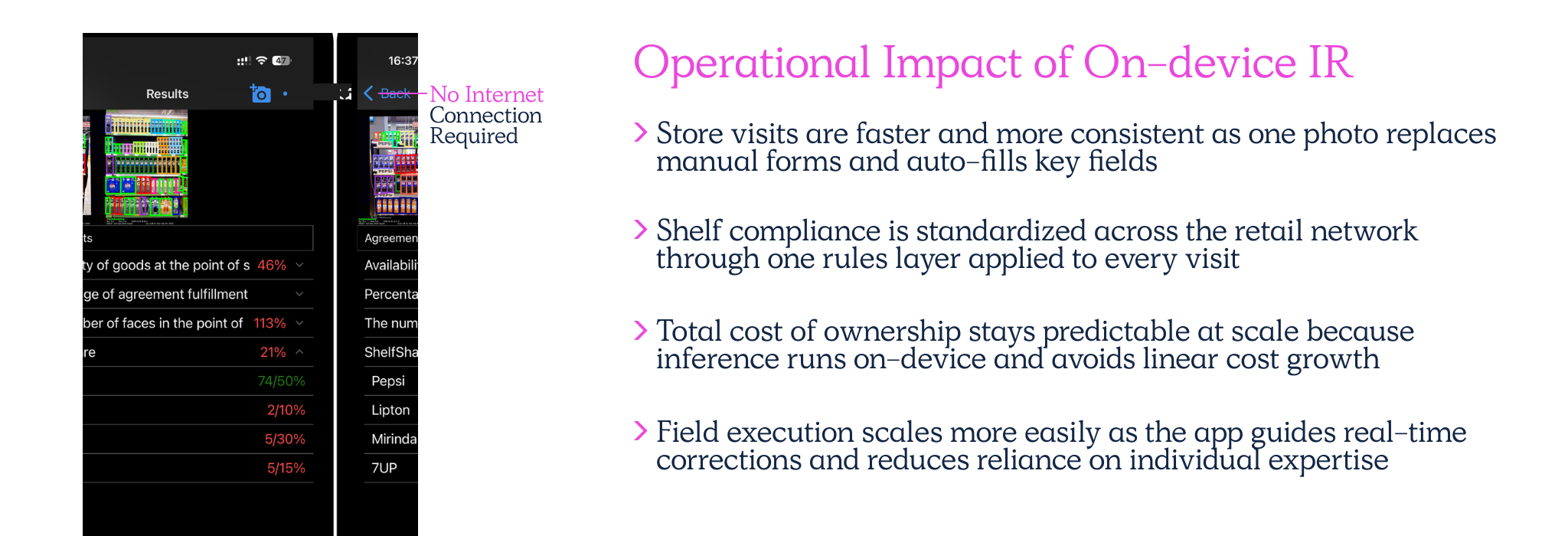
On-device IR moves the inference from the cloud to the merchandiser’s smartphone. Images are not uploaded — the neural network processes them locally in 3–7 seconds, even in airplane mode. This immediately removes the core limitations of traditional and cloud-based approaches.
Because it works offline, merchandisers can audit shelves anywhere — in stockrooms, basements, large-format stores, or regions with poor connectivity. Near-zero latency gives instant visibility into what was recognized, allowing immediate corrections on the spot. In pilots with our CPG clients, this real-time feedback has consistently improved data quality, accelerated issue resolution on the shelf, and increased engagement of field teams.
On-device execution also reduces infrastructure costs: inference runs on the phone, not on Azure or other cloud platforms, making the model more predictable and cost-efficient at scale.
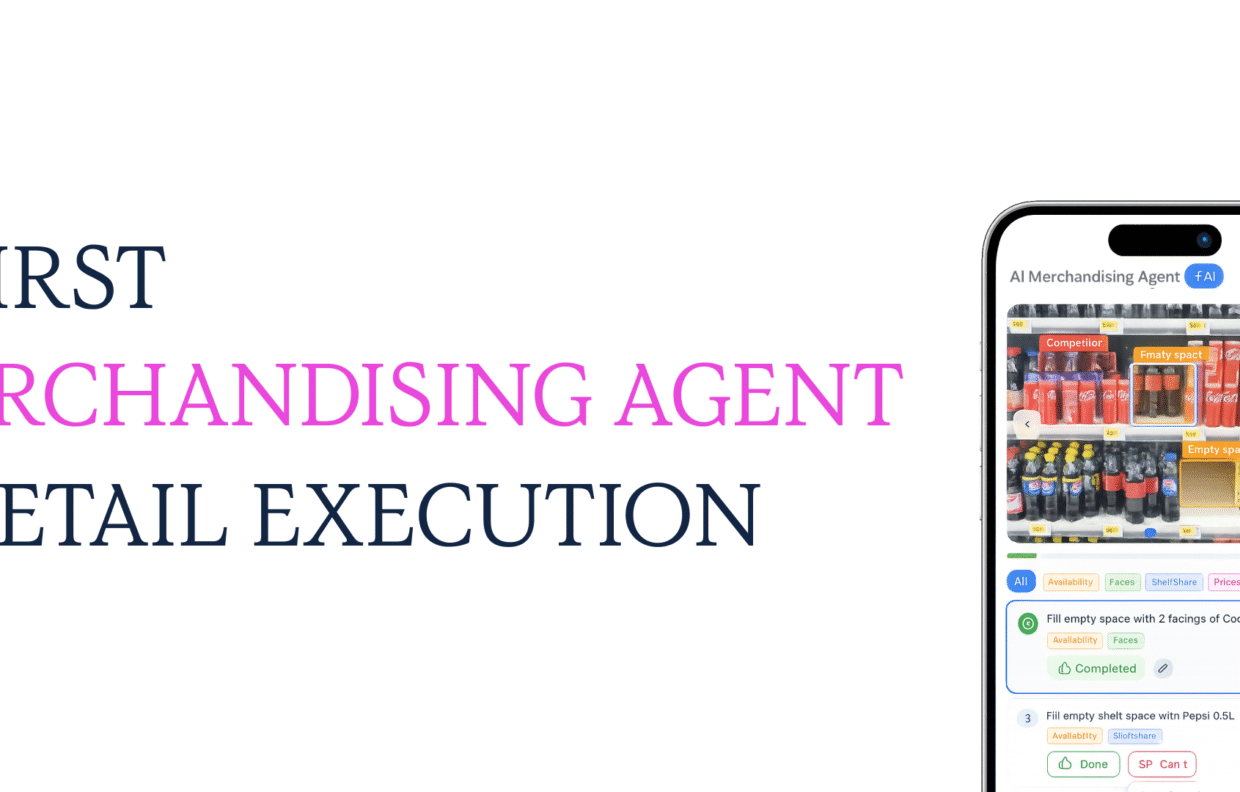
Most importantly, local processing creates the foundation for the next generation of retail execution tools — AI agents that guide merchandisers through the visit, recommend corrective actions, and automatically enforce Perfect Store standards. This is no longer “just recognition” — it is the backbone of the future retail execution ecosystem.
What On-device IR Can Do
Using a photo as the primary data source, on-device IR captures the full picture of shelf execution — from product presence to pricing accuracy. It verifies assortment compliance, identifies required and must-have SKUs, counts facings, calculates share of shelf, detects gaps, and interprets POSM and promo campaigns.
At the same time, it recognizes shelf tags, extracts price values, checks them against recommended pricing, and flags discrepancies — enabling unified control over both availability and price compliance.
Planogram support is being integrated through a unified business logic layer, enabling the system to not only recognize what is on the shelf but also determine whether it is in the correct place.
Key Benefits for CPG Retail Execution
1. Faster store visits
Instead of filling out multiple forms, a merchandiser takes a photo — the system automatically populates all related fields (SKU presence, facings, share of shelf, pricing, must-have compliance). The user simply reviews and confirms, reducing visit time while increasing data accuracy.
2. Consistent execution across the entire retail network.
Business rules are consolidated into a single configuration layer (“agreements”), which defines how visits are evaluated. This removes subjectivity, ensures alignment across teams, and creates a transparent, standardized execution process.
3. Predictable economics and effortless scalability
Because inference runs on the device, costs do not increase linearly with the number of photos or visits. This makes on-device IR a financially resilient option for large CPGs and a strong competitive advantage in RFPs and enterprise rollouts.
4. Simplified onboarding and reduced dependency on experience
Merchandisers no longer need deep category knowledge — the app highlights deviations and guides corrections. Execution becomes stable and less dependent on individual expertise.
From Faster Audits to a New Execution Standard
On-device Image Recognition introduces a new operational model for CPG — one where shelf data is instant, reliable, and independent of connectivity. It gives companies unprecedented control over execution and lays the foundation for the next era of AI-powered retail tools. For brands looking to achieve consistent, scalable, and cost-effective in-store excellence, on-device IR is not just an upgrade — it is the new standard.
Interested in bringing On-device Image Recognition to your field teams?
Reach out at sales@effie.ai to book a live demo.
Related

AI Merchandising Agent vs. AI Image Recognition

Overview of CAGNY 2026