Holiday Season in CPG: Key Signals After the Peak Weeks


The holiday season remains a critical period for CPG brands and retailers, when consumer demand, promotional intensity, and operational pressure reach their highest levels. Following the close of the season, the industry now has access to confirmed retail data and transaction-level signals that help assess overall performance and the operational challenges that defined this period.
This overview is based on verified retail sales metrics, payment transaction monitoring, and early industry insights.
What the Retail Data Confirms About the Holiday Season
With the holiday season concluded, confirmed aggregated retail sales data is now available. According to the National Retail Federation (NRF) Retail Monitor, U.S. holiday sales grew by approximately 4.1% year over year between November 1 and December 31, reaching the upper end of the season’s forecast range.
These results are based on actual credit and debit card transactions and indicate a generally stable level of consumer spending during the peak period. At the same time, retail indicators once again confirmed that the omnichannel model remains the norm: online and brick-and-mortar channels operated in parallel, while a significant share of sales continued to concentrate in the key shopping weeks.
Early Signals of Shifts in Shopper Behavior
During the holiday season, changes in how shoppers make decisions under high-pressure conditions became more visible. Increased price sensitivity and reliance on promotions emerged as the default behavior, while decision-making cycles shortened significantly. In this environment, product availability, shelf visibility, and accurate promotion execution directly influenced brand choice.
Shopper journeys remained hybrid: research and planning often took place online, while final purchases were frequently completed in physical stores. This dynamic increased the importance of cross-channel alignment and store-level readiness to handle peak traffic.
At the same time, shoppers demonstrated a higher tolerance for substitution during the final pre-holiday weeks. When planned items were unavailable, consumers were more likely to switch brands, making in-store execution a critical factor shaping actual seasonal outcomes.
Execution as the Decisive Factor During Peak Weeks
Issues that remain manageable during regular periods can escalate quickly under high-demand conditions. One of the most significant risks is out-of-stocks of critical SKUs: rapid demand shifts and heavy reliance on promotions often lead to shortages of traffic-driving or promotional items, where the cost of error is highest.
Additional pressure comes from compliance and human factors. Fast-changing promotional planograms require tight coordination between HQ teams and field execution. Under operational strain and fatigue, error rates increase—from incorrect pricing to incomplete promotion execution—often resulting in retailer penalties and erosion of brand trust.
Limited operational agility further amplifies these challenges. When issue detection and correction rely on manual data collection, response times often lag behind changes at the shelf level. As a result, gaps between field data and actual sales limit the ability to act on time and make informed decisions.
When in-store execution becomes unstable, losses extend beyond missed sales. Higher substitution rates, erosion of planned brand mix, and reduced promotional ROI follow, shifting execution from a supporting function to a direct driver of business outcomes.
What This Means for CPG Teams in 2026
Insights from the peak period suggest that preparation for the next cycle must begin much earlier and extend beyond promotional planning alone. For CPG teams, this implies a shift from retrospective analysis toward real-time operational readiness.
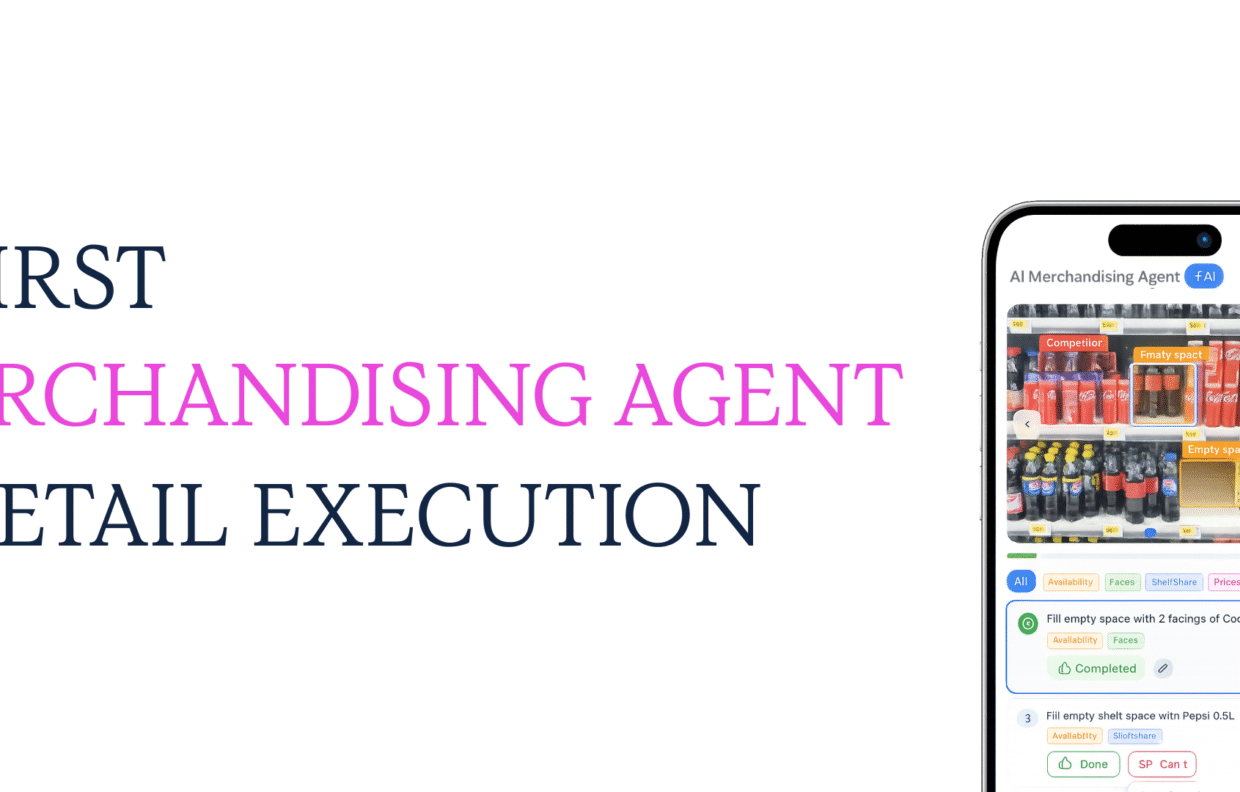
Key priorities include early detection of OOS for critical SKUs, tighter control of shelf-level execution, and reduced reliance on manual processes. In this context, the role of AI agents continues to grow—enabling automated detection of execution gaps, alignment of field data with actual sales, and compression of the “issue → action” cycle from days to hours. Under peak-load conditions, this level of speed and precision increasingly determines promotional ROI and brand resilience in the shopper’s basket.
Conclusion
Confirmed retail data provides a clear view of overall consumer spending dynamics during the peak period. At the same time, execution-related signals—product availability, promotion accuracy, and speed of response to disruptions—remain decisive for the actual effectiveness of promotional investments and a brand’s position in the shopper basket.
Related

AI Merchandising Agent vs. AI Image Recognition

Overview of CAGNY 2026